
Have you ever struggled with critical feedback at work, despite your track record of success and hard work?
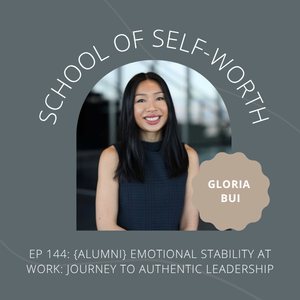
That’s what Gloria Bui was facing when she joined the Seen as a Leader course. Like so many high-performing Asian-Ameriacn women, she was used to accolades and being seen as excellent, but she felt blocked about how to move to the next level at work.
Through the course, Gloria learned to stabilize her emotions and respond with intention, something previous leadership coaching and communication courses hadn’t fully addressed for her. She discovered the power of knowing and acting from her authentic self, rather than feeling compelled to prove her worth in every meeting or chase external validation like a promotion for the sake of status.
As Gloria grew more grounded and confident, she saw dramatic changes at work and in her personal life – becoming the pivotal person colleagues wanted in the room and experiencing more connection in her relationships.
You don’t want to miss the details of how Gloria shifted from emotionally reactive to stable and grounded at work, and how that changed everything.
The Importance of Bridging the Perception Gap in Leadership [06:16]
Emotional Regulation Leads to Personal and Professional Growth [08:03]
Speaking with Intention Improves Workplace Perception [10:40]
Authenticity as the Foundation of Confident Communication [16:35]
Gaining Clarity and Patience When Navigating Career Choices [19:07]
The Power of Community and Group Coaching for Asian American Women [25:27]
“I am who I am, and I choose to define myself, and no one else can define that.” Gloria Bui
“You have to know the root of who you are to really show up in that powerful way.” Gloria Bui
“Being able to say, ‘It doesn’t have to be the best or perfect, but what do people align on?’ And feeling good about that has helped my perception at work.” Gloria Bui
“I became what I wanted to be all this time, which is that pivotal person in the room.” Gloria Bui
“I learned that I could control and read my emotions, and that was such a quick win.” Gloria Bui
“I am who I am, and I choose to define myself; no one else can define that,” Gloria Bui.
TRANSCRIPT
144 Gloria Bui
NICOLE TSONG
Hello, friends. Welcome back to another episode of the School of Self-Worth. I am your host, Nicole Tsong. Today, I get to do one of my very favorite things in the world, which is to introduce you to a graduate of my course, Seen as a Leader. Today’s guest is Gloria Bui.
When Gloria first started with me, man, she was so frustrated. She was feeling so unseen and unheard by her leadership at work. She came in really wanting to have a shift in that relationship and that experience for herself as a leader, and through the work that she did inside the course, she completely changed how her leadership and how her executives viewed her. Even more importantly, she stepped into her own internal authority, and it has shifted how she’s seeing the trajectory for herself and what’s next for her in her career. Her story is so remarkable; it is so inspiring. You do not want to miss this, so stay tuned. And before we get into it, if you are a high-achieving Asian American woman who wants the exact steps to become the leader that executives advocate for and promote, DM me @nicoletsong on Instagram, because I’ve got something over there for you. Okay, friends, let’s go chat with Gloria.
Welcome to the School of Self-Worth, a podcast for ambitious women who know they are worthy of an astoundingly great life. Join us weekly as we get on the right side of your intuition, redefine success, and reclaim your self-worth. I’m your host, Nicole Tsong, an award-winning journalist who left it all behind to become a bestselling author of three books and a work-life balance expert, helping ambitious women unlock their intuition and step into a life of fulfillment and radical joy. Every single week, I will bring you diverse and meaningful conversations with successful women from all walks of life who share insights about what it takes to be brave, joyful, and authentic every day. Every episode is thoughtfully designed to leave you feeling empowered with tangible tips and advice that will lead you to your next breakthrough.
Gloria, welcome to the School of Self-Worth. It’s so great to have you on the podcast.
GLORIA
Thanks, Nicole. So great to be here.
NICOLE
I always love reflecting back because that’s kind of my favorite thing, going back to where you were when you and I first connected, which was, I guess, probably around this time last year, right? Like, a couple of months in the spring, and hearing what you were challenged with. A lot of it, I remember at the time, was that you had come out of some challenging feedback from performance reviews, and you were just feeling like, oh, I needed something different. So if you would share with everybody where you were last year before you started working with me.
GLORIA
Yeah, wow. Seems so far ago, but I guess not that much at all. So in terms of where I was, I was about a year in, almost at Macy’s. I felt like I had done so well and had so much impact within my first year, especially coming from consulting, where you work on a project for a few months, and it’s more strategy-oriented, so you don’t get to see things implemented through, if they even get implemented. I was on the ground with the team, seeing stuff end-to-end.
So I was like, surely my performance review is going to be great, right? I helped save the company so much money. I’m creating new programs that lift revenue. And to what you were talking to, I was definitely caught off guard. So yes, the impact was true, but where there was the gap was bringing stakeholders along. I would come to the conclusion and feel really right in that, and that’s what I was focused on. It was really jarring at the time, even though now it seems so obvious. I just had that feeling of, oh, I work so hard, I care so much, I have good intentions, people like me, so this can’t be the case.
That was one component of it, and then two, the feedback itself. But then how I felt, it just really kind of knocked me off kilter for days. I was like, why is this so much for me too? So I didn’t like the feedback and then also the feeling. Another component was I had a new boss, so there was a transition. I felt like I needed to also shift myself and my relationship with her. This confluence of factors led me to you.
NICOLE
Thank you so much for sharing that. Would you say, Gloria, that up until that point, you typically were somebody who always got great feedback, like you were always someone who was considered pretty successful?
GLORIA
Yeah, for sure. Since I was a kid, from both childhood to all the way to college and grad school, I have the accolades and the resume. So again, to hear that people weren’t fully aligned on that was, again, surprising.
NICOLE
Well, I would say that’s really common, actually. I find, so many of the Asian American women who come to me, many of them from having been inside my courses, they’re really successful, they’re really smart. They’re just like you. They’re so capable. They’ve done all these things, and oftentimes where people start to recognize and see that something is a little bit amiss could be something like a performance review or something didn’t occur the way you expected it to. Because you’re someone who always is like, well, if I work hard enough, it always works out for me. It always tends to happen.
I just wanted to point that out for everyone who’s listening because, you know, Gloria is not an exception in that case where she was just sort of like, huh, I thought I was doing so well, and now they’re telling me something different.
And that gap,that perception gap is often one of the major issues I feel for Asian American women when they’re starting to reach a certain level in their careers. So, coming back to you, where you were at, you were like, okay, I really wanted to be promoted. That was the biggest thing that we were talking about. What prompted you to say, okay, I really want to work on something differently? Because you had also done leadership coaching and other kinds of programs before. So share with me a little bit what you had done and then also how things were different once we started working together.
GLORIA
What I had done before was actually a lot of coaching. I went to business school, where we had access to coaching. Also in business school, I had a pretty immersive and very popular course around communicating with presence, and that was something that I had wanted to work on and even after that course needed to work on. It was great, but I felt like I was still missing something. In consulting, we also had access to coaches as well, which, you know, were all great, but they felt really cookie-cutter, and I really didn’t feel that much of a difference. So I came across your program, and it felt a little different, and I trusted my intuition.
I know we had conversations before it became finalized, but it felt like one geared towards Asian American women, which I appreciated. But then it also, again, didn’t feel like a generic, corporate-type cookie-cutter program.
NICOLE
So, Gloria, when you entered the program, what did you experience right away? What was the fastest change, the earliest change that you noticed for yourself?
GLORIA
The fastest change was that I noticed I could regulate my emotions a lot better. So back to earlier coaching, I had heard the feedback to react or, excuse me, respond, not react, or, you know, when you feel like you’re getting angry, take deep breaths or pinch yourself. I knew all that, but I couldn’t really execute. I was already feeling all the feels. Through your tools, I learned that I could control and read them. That was such a quick win. Yes, I came in for work, but yeah, my husband certainly noticed soon as well.
NICOLE
I think it is something where people say that kind of thing all the time, but the actual practice, the how of it can be hard to execute. It sounded like for you then some of the things that we work on in Seen as a Leader, showed you how to do it.
GLORIA
Yeah, for sure.
NICOLE
What would you say then? Right, because you came in for work, and then obviously it started to impact other areas of your life. As you started to regulate your emotions more, what changes did you see?
GLORIA
Yeah, I saw one. I was again, not as emotionally reactive. I think what that actually looks like as an example is being less defensive. Coming from a background of perfectionism, where our culture often points out a lot of mistakes, I realized that I would get very negatively expressive whenever there was criticism, even though I felt good about my work. That also impacts me personally.
NICOLE
So that helped keep things more level. What else?
GLORIA
Just quicker to forgive interpersonally, like with my husband. Less likely to judge. People are doing their own thing; I’m doing my own thing. There’s no reason to over-infer from others’ actions or interpretations of you. I would say a lot, but those are some of the things.
NICOLE
Amazing. I remember that was such a big one in terms of our own relationship with the people who matter the most to us. I remember for you, you had some really big changes in terms of perception with people at work. How did it affect you p ersonally, like understanding how to operate differently, like in meetings or with leadership?
GLORIA
One was really learning to speak with intention. Back to the emphasis on communication that I wanted to work on. Even before all this happened, I often felt the need to try to speak up. I didn’t want to be the quiet Asian stereotype. I was also equally in environments where speaking up was what you were kind of indexed on. Whether it was like in business school, your attendance is based on participation, or even if you’re in a problem-solving session in consulting, the partner needs to hear you speak up, even though the comment might not be as strong.
In terms of how I showed up at work, I wanted to speak with more intention. I don’t even think I realized it was that at the time. I think it was just like speaking with more stability and less speed. There’s also a component of myself where I didn’t want to waste anyone’s time. I spoke so quickly, and I couldn’t get that tick off. In terms of perception at work, I think speaking with intention has helped with that because I’m not speaking to prove myself or prove a point. It’s because I have something to say, and I want to say it.
And then, two, just back to not needing to feel as defensive or that someone’s perception of me is indicative of my true value. It’s just like what you say, smooth as silk. Now it’s like, okay, they want to think that, or they clearly don’t respect me or don’t think I’m that smart. Or maybe they don’t, but maybe before I would receive that slight. But now it’s like, either way, if it’s true or not, I am who I am, and I know my value. I know I’m smart, I know I’ve got good intentions, and yeah, that’s okay. In terms of feedback and outcomes, I used to feel very protective of, like, well, this is the answer. This is the right thing to do. Isn’t it obvious? The numbers should be reported this way. This is how you show correlation and how we can really dig into the things. I’ve learned that there’s so much sensitivity around numbers, whether it’s objectively right or wrong. Being able to say, okay, what do people align on? Feeling good about that and realizing that that’s what people see has also helped my perception at work.
NICOLE
That’s amazing. So for you, actually letting go of being so intense or thinking it has to be a certain way or black and white has helped you handle the ups and downs of what’s going on at work, for sure.
GLORIA
I would say in my personal life and even professionally, I was very rigid before because I had such high standards for myself that I guess people really didn’t value it as much. Even if the intentions were good, it put a lot of stress on him too. Just being more flexible and not letting outcomes dictate my feelings has really helped lighten things but then also lead to more impact.
NICOLE
I remember one time you came into a session and you’re like, oh my gosh, I just had such great positive feedback. I remember, I think it was from your VP who wanted to make sure you were in an important meeting. Did you start to no tice even your relationship with your boss got easier? What else were you seeing for yourself, or could you share a little more about those experiences?
GLORIA
I became what I wanted to be all this time, which is like that pivotal person in the room who’s not even necessarily related to this function because I sit in strategy. That was the first big win where I could see that I was making a really big stride in communication. The root of that is truly being authentic and how I show up. My objective is not to be smart; that wasn’t it. If I’m honest with myself and dig deep, that’s what I wanted to be. One of my old bosses was like, okay, what’s your intention? Do you really want the best outcome, or do you want to be right? Yes, those could both be true, but I had this flavor of wanting everyone to know Gloria’s right and smart.
Just being really intentional and speaking less, but when I do, with more intention and gravitas has been a change. As for my relationship with my new boss, it’s been a 180 where partners now really respect her feedback. I receive it so much differently, and that’s been a great win.
NICOLE
What would you say was the difference for you? Those other communication courses didn’t really help you figure those things out. What was the difference inside Seen as a Leader that helped you really see yourself differently or even come into this deeper level? What I feel from you is this grounding, this stability, this confidence that was missing at the beginning and that you really evolved into during the course.
GLORIA
That’s a great question. In that course, communicating with presence and a lot of books you read, it is about authenticity being at the root of strong communication and strong presence. I thought I felt really authentic. I know my values; I have a strong sense of gratitude. I show up; I care. In terms of the difference with that still being the same for me in terms of my values, I would say, yeah, I think it’s the underlying intention again. So maybe the values were authentic, but then maybe the objective was not.
Through a course like Seen as a Leader, was my intention to get promoted for everyone to see me as awesome while I might still have great values? Or is it my intention to show up as who I am? That’s what shifted.
NICOLE
Yeah, that’s so powerful because I feel like sometimes people come to me and they say, well, I want the corporate strategies or I want the communication tips. I’m like, well, I can give you all of those, but it doesn’t work unless it’s coming from you having a deeper understanding of who you are. Like you just said, you have to know the root of who you are to really show up in that powerful way. I’m pointing it out because you said it really well, and I always like people to hear that. Sometimes I think we get so swept up in like, oh, here are the three things you should say in these different situations. While those can be somewhat helpful, the real strength comes from the ability to know who you are. So whatever situation comes up, you can handle it.
GLORIA
Yeah, exactly. Another thing I will say now that you said it, is I would literally listen to podcasts on public speaking and frameworks from Stanford GSB. I was like, why can’t I just get it? It’s knowing who you are, and then if you do, your intuition is even stronger.
NICOLE
Where else would you say then? This is a lot about how you’ve been showing up in work and in life, from the work that you were doing. How did it help you in terms of where you’re headed? Because that was another thing we talked about, you were interested in working on. Do I want to stay at this job? Where do I want to go? Do I want to develop my own thing? Where are you now with that?
GLORIA
I would say I definitely have more clarity- one, and – two, more patience. Even though that clarity doesn’t mean I know exactly what the next step is. Where I thought I wanted to be when I started with you was to be a director, and that was like, I need to do it in a year. I realized I always had this M.O. Even in my other jobs, I need to be an EM in a year. What we talked about is, okay, what do I want? What is my intention? Do I really want that? Is that just another checkmark to get validation from the outside world? From this experience, I’ve really learned what energizes me and what environments I do well in.
I realized I haven’t been putting myself in those environments quite often from a professional standpoint. For me, I really love working with people and working on all types of projects and getting my hands dirty. I think something entrepreneurial is really what I need to set my eyes on and am working on the side. I think that’s where I want to be. I don’t want to fall into the trap of getting the next thing that falls in my lap. That isn’t to say I didn’t work hard to get where I am at all, but I think looking at things with more intentionality and what I want is important. So, yeah, I think something a little riskier is what’s going to be at play.
NICOLE
Which is super exciting because, a lot of times we think that we know what we want. I would put you in that category: you thought you wanted to be a director, and then you’re like, actually, I don’t think that’s what I want. That’s just what I thought I was supposed to have at this point in my career. Now you’re like, oh no, there’s more out there for me that I’m interested in and excited about because you want something riskier and different and challenging.
Does that feel like fun for you or something you would have ever considered previously?
GLORIA
I think I would have considered it for sure. I think I always knew I wanted to do it, but would I have acted on it? Would I have just, like, let the next recruiter who told me about their fancy company or, like, big name lure me in? And then I go throughout my career not in a path that I intentionally set, and then how much do I delay that entrepreneurial component? And especially, you know, given the timing and everything. So I think now it’s just like being more directive and setting boundaries for myself.
NICOLE
I mean, you spoke to something that I think is really common for smart, successful people is that you do get opportunities a lot. Right? Like, you’ve had many recruiters over time say, “Hey, Gloria, there’s this cool thing that you can look at,” and then what happens? I feel like what we work on inside the course is having that discerning eye of, like, is this actually the right thing for me? Because if you’re listening to this, I know you’re already a successful person. You’re already accomplishing a lot. You’re getting things done, and the challenge for you is, like, is this the right thing for me? Is this the direction I really want to go? And I think especially right now with the environment we’re in, you know, there are tons of layoffs in tech.
There’s a lot of change out there, and it can be really scary. It can make us cling to things that may not actually be right for us. But I don’t get that sense from you at all. I’m just saying that that can be sort of our cycle that we go into or our patterns we fall into. What I love from you, Gloria, is that’s not even at play. You know, you’re kind of like, “Well, I’m going to stay where I’m at, or I might move on,” and it’s going to come from you, not from what other people think you should do.
GLORIA
Yeah, for sure. And even as I think about the entrepreneurial space and the startup world, I’ve actually had to figure out what I want within that. There are times when I’ve thought, “Oh, should I have joined that startup? They’re worth like a billion dollars now. I should have done that.” But I’m like, I’m not into affiliate marketing and influencer purchasing. That’s on me. I don’t even have social media, so it wouldn’t have been the right fit. It all worked out, but I still have to temper myself, even though I do have more clarity. Yeah, I’m feeling good.
NICOLE
I love that you now have the knowledge and the ability to say, “Oh, okay, is this the right fit, or is this not the right fit for me?” Whereas before, you might have just jumped at everything that came your way. Is that right? And what would you say, at the end of the day, your biggest takeaway from being inside the course?
GLORIA
I would say: One, invest in yourself. Two, if you haven’t done that or are in a similar situation where you feel stuck despite all the hard work and effort and good intentions, this is definitely a course to consider. A takeaway is, I am who I am, and I choose to define myself; no one else can define that.
Three, I would say, everything is meant to be, and if we follow our intuition and chart our own path. I think you’ve been such a great example of that. I appreciate throughout the course your own story. I still remind myself, too, as I’m like, “Oh, I love the startup so much,” but it’s not the right time. It’s like, okay, timing, when they maybe are a little bigger and need someone with more strategic and operational leadership, maybe that’s the right time. So it’s like, don’t beat myself up over it too much. I think just having grace and trust in the process, too.
NICOLE
Those are awesome takeaways for you. I know one thing that we don’t always talk about much on here, but I know you wanted to share a little bit more about – is the relationships that you build inside the course and the people that you meet, and what it’s like to be in a space that’s led by an Asian American woman and is a container for Asian American women. What was that like for you? What did that give you?
GLORIA
I loved it. I was going to say that was another takeaway. Being in this space is so valuable. I appreciate that the core is, yes, everyone wants to be seen as a leader, but there are so many different dimensions in terms of why the other women were there beyond that. Whether it’s relationships with partners or children or parents or just nuances around work relationships.
I learned so much from that because I think they’re all pieces that we can take away, and I definitely did. I remember one of our cohort members was talking about how she felt tethered to her job because of health insurance. I was like, oh my gosh, I feel that because my husband’s in real estate. Just things like that, I wouldn’t even think were bothering me. It’s good to have that space for conversation. I also appreciate the diversity within the cohort of what an Asian American group looks like, from both cultures within and also age. I thought it was just a fun group to connect in so many different ways.
NICOLE
Well, I feel like I would say this myself, because I’ve looked for Asian American spaces, and they exist, but there aren’t a ton of them. Right? There aren’t so many places for all of us. Part of the reason I love having that space is that I’ve always wanted those spaces more myself, you know? It’s so fun for me to have people like you who come in and really benefit from it. At the same time, seeing the diversity within that cohort is so much fun.
GLORIA
Yeah. To your point, it’s rare. When you do have it, it’s like a happy hour, or you get to know that one person one-on-one. But again, just to come together as a powerful collective is really great.
NICOLE
What would you say to anyone who’s considering the course then?
GLORIA
Yeah, back to my one takeaway as a stereotypical, frugal Asian American: it’s worth the investment if you’re serious about putting the work into the program and want to fundamentally change your relationship with yourself and others around you. Again, group coaching, I think I shared this with you, but I was sharing with my friend, who’s a gynecologist, about group coaching and how I really liked it. I thought, “If I want my bang for my buck, I need to do one-on-one coaching.”
But this has been so great for the reasons we just discussed. She emphasized what studies have shown about group coaching with parents-to-be or group teaching programs. Sometimes you’re afraid to ask a question, or you don’t realize it’s a question you have. Just being able to hear and build off each other is really additive. It’s just great. I’m glad, even though it’s over, to still have you as a mentor I can go to.
NICOLE
Well, thank you. I appreciate that so much. I love when I hear that what I’ve said resonates, because I love knowing that you guys are still doing those things. That’s the whole goal for me as support for you, to help you continue to be in that discernment and have powerful choices in your own life moving forward. I would also say that a lot of what is affecting us these days is a lack of connection and community in general. I think that’s something people struggle with, and I love that you got that from this.
I think that’s why group coaching is really powerful because you actually make connections. I have a lot of friends, some of whom I don’t see in person very often, but we connect a lot online. It makes a big difference to have people who are on the same track as you. Inside Seen as a Leader, it’s all people who want that change, who want to see themselves differently, who want to show up differently. It’s so powerful to realize, “Oh wow, I’m not the only one.” Because if you look at your coworkers or friends, they may not be in that same space as you. It’s really powerful to have a group dedicated to growth.
Well, Gloria, it’s been such a joy to have you on. Now we get to wrap up with our rapid-fire questions. Are you up for it?
GLORIA
Oh, boy. Okay. Yes.
NICOLE
They’re super fun. Okay, so tell us first, what is the last thing you watched on television?
GLORIA
The last thing? Oh, this is so embarrassing. But I gotta be honest. The new iteration of Gossip Girl. So, like, the Gen Z version. They just got to season two.
NICOLE
That’s a fun one. I was an original Gossip Girl full devotee, so that sounds fun.
GLORIA
I know I betrayed my millennial generation, but it’s definitely raunchier.
NICOLE
That’s so funny. I love that. Okay, awesome. Next question, what is on your nightstand?
GLORIA
Oh, my nightstand. I have my Kindle, so I read even if it’s just three pages before I go to bed, my cell phone when I’m sleeping. And then, let’s see, quarter of a hydrocortisone. Is that what you use when you’re itchy? Oh, yeah. We’ve been keeping the windows open in the summer, but sometimes the gnats get to you.
And then an eye mask, because I’ll put it on when the sun rises, to get in my beauty sleep.
NICOLE
All right, and then what is the last thing that you tried that was new, and what was it?
GLORIA
Oh, the last thing I tried that was new, was bouldering, and I did it with my nephew in California, and I told my friends about it because they do it. Then we did it again this past Friday. The other new thing was biking from my part of Brooklyn all the way to Williamsburg, which, even though they’re in Brooklyn, is so far. So I got a two-for-one that day: the bike ride and the bouldering.
NICOLE
Oh, that’s so fun. That’s like a very physical, active day. It sounds like my kind of day. Awesome. Okay, and then the last question is, what are the top most used emojis on your phone?
GLORIA
Oh, I like the smiley face with sweat. I don’t know; I feel like I’m so awkward, so I’m always like that. And then I laugh a lot, so probably the crying-laughing emojis, and then probably the pink heart. I love every one.
NICOLE
Yeah. Oh, that’s sweet. Awesome. I always love that. We all use lots of different ones, but the ones we use the most are always pretty fun and telling.
GLORIA
So I want to know yours now.
NICOLE
Oh, no one’s ever asked me that, so let me see if I can remember. I feel like, well, the one I’ve been using a lot, and I think it’s because my baby is growing so fast, is the crying emoji. But like, the crying from – oh my God, I can’t believe he’s getting so old. The waterworks one. Or also, friends with babies our age are having parties that we can’t go to, and then I’m always like, I want to go to their baby parties. So I’ve been using that one a lot more recently.
Yeah, I always use some iterations of hearts. I also use the laughing emoji quite a bit. But then I also sometimes, you know, I like to play around in there. And sometimes I like the little slumped-over smiley face, you know, when you’re brain dead or like you’ve been overusing your brain. I like to use that one because I’m a big reader.
And then I was a working mom. But right now, it’s book bingo happening in Seattle, and my friend and I always go for a blackout, which is 24 books in three months. The only way to do this is to read eight books a month, basically. It’s pretty intense and hardcore. I usually read like a book a week as my average. But that’s a little fast-paced right now with the baby. To do it right now, but I’m still committed to it, I have to have an audiobook, an ebook, and then also a regular book so that anytime I have any downtime, I’m reading something. I was telling her about this strategy, and then I have to use that emoji because it’s like my brain is a little fried from constant reading.
And then we always have to take a break at the end of the bingo because I’m burned out. I’m always like, I’m so tired from reading so fast.
GLORIA
Oh my gosh. I knew you were an avid reader, but I didn’t realize that was your count. That’s insane.
NICOLE
Yeah. Well, I normally cannot. I would say my average before I had a baby was like 50 to 60 books a year. So I do read a lot. I did manage to read 52 books the year my baby was born, but that’s mostly because I was on the couch nursing a lot. I actually read a lot. But now that he’s more active and on the go, I cannot read nearly as fast as before. That’s why I’m having to use audiobooks and other formats.
Anyway, I just don’t have as much time as I used to. But I love reading, and it’s always this big challenge and push. I always laugh because we don’t really win anything at the end. We just get the satisfaction of doing it..
GLORIA
Yeah, I was gonna say, what’s the prize?
NICOLE
Well, they don’t even give out prizes. You just submit it and then hope they give out like five prizes. But 2,000 people submit, so the likelihood of winning is very low. But every year we just go for it because we’re just, you know…
GLORIA
Okay. But that makes me happy that Americans are still reading books then. At least 2,000 are…
NICOLE
Yeah, I love reading so much. It’s one of my favorite ways to relax and just have fun. But every year during book bingo, my husband is always like, “Are you having fun? Is this fun?” I’m like, “It is fun! Let me just do it, and then I’ll talk to you in September when it’s over.” Yeah, so anyways, that was a long explanation for my emojis, but that’s just the state of the current emojis.
GLORIA
To your point, it says a lot about you.
NICOLE
Yeah, it says a lot about the person. Well, Gloria, it was such a joy to have you on the podcast. Thank you for sharing your story and insights. I love seeing the growth of people within the course, and you were such an exemplary version of someone who really dedicated yourself. You showed up every week, you did the work, and that’s when we get the biggest results. It was really powerful to see you come out with so much clarity, joy, and ease. I love when husbands notice the changes that are going on. So anyways, I’m just so proud of you, and thank you so much for sharing your story with us.
GLORIA
Of course. Thanks for having me, and thanks for everything, Nicole. It truly wouldn’t have happened without you.
NICOLE
Thank you so much for tuning into today’s episode. Before you go, don’t forget, if you are a high-achieving woman who wants to uncover your biggest blind spots preventing fast intuitive decisions, I’ve got a 72-second assessment for you. So make sure to DM me @nicoletsong on Instagram, and thank you for being here and for listening. We read every note that we get from you about how the podcast is making a difference in your life. Please know how much we appreciate each and every one of you.
Until next time, I’m Nicole Tsong, and this is the School of Self-Worth.



Discover the blind spots holding you back and take the Boundary Tendencies Quiz
Subscribe to her newsletter